Back home
TL;DR: The gap between marketing and sales is a content problem. Modern marketing can close this gap by creating content that is specifically optimized for every member of the B2B buying committee. Using a hybrid approach where human strategy and AI insights work together, you can turn content into a powerful sales-enabling tool that qualifies leads, handles objections, and ultimately accelerates your business growth.
The boardroom often hears the familiar refrain: "Marketing needs to generate more leads!" And the marketing team often counters, "Sales isn't converting the leads we send!" It's a tale as old as business itself, but in today's complex B2B landscape, this disconnect isn't just an inefficiency—it's a critical revenue blocker.
The truth is, the gap between marketing and sales is often a content problem. Generic messages fall flat. Misaligned assets create friction. But what if your content could become your greatest ally? What if it could proactively qualify leads, expertly anticipate objections, and confidently guide sales teams to a signed contract? That's not just possible; it's the new imperative for accelerating sales in B2B.
As an experienced marketer, I've seen firsthand how content, when wielded strategically, transforms the entire sales pipeline. Let's dive into how modern marketing, powered by smart insights, can truly move the needle.
1. Beyond lead volume: Content for qualified leads
For years, the success metric for marketing was simple: more leads. But in B2B, a high lead count means nothing if those leads aren't truly qualified. The modern approach isn't about casting a wider net; it's about fishing with precision.
SEO-Minded Content: Your website and content need to be built around long-tail keywords that reflect specific buyer intent. A prospect searching for "best CRM" is higher in the funnel than one searching for "CRM features for manufacturing." Marketing's role is to create content for both, guiding the prospect with purpose. This means detailed whitepapers, targeted blog posts addressing pain points, and use cases that resonate with their industry challenges. When prospects find answers that deeply match their needs through your content, they arrive at sales conversations pre-qualified and more engaged.
2. Content as an objection handler to back sales
Sales professionals spend a significant portion of their time addressing questions and overcoming objections. Imagine if marketing content could get ahead of these challenges, providing answers before the prospect even voices them. This isn't just wishful thinking; it's sales enablement at its finest.
Your marketing team should be collaborating closely with sales to identify the most common hurdles in the buying process. Then, build dedicated sales content to address these. This could be:
-
FAQ documents tailored to specific product features.
-
Competitive comparison guides that highlight your strengths transparently.
-
Video testimonials showcasing how others overcame similar hesitations.
When sales has a library of hyper-relevant content at their fingertips, they spend less time educating and more time closing. This proactive approach to B2B content strategy keeps deals moving.
3. The B2B buying committee optimization
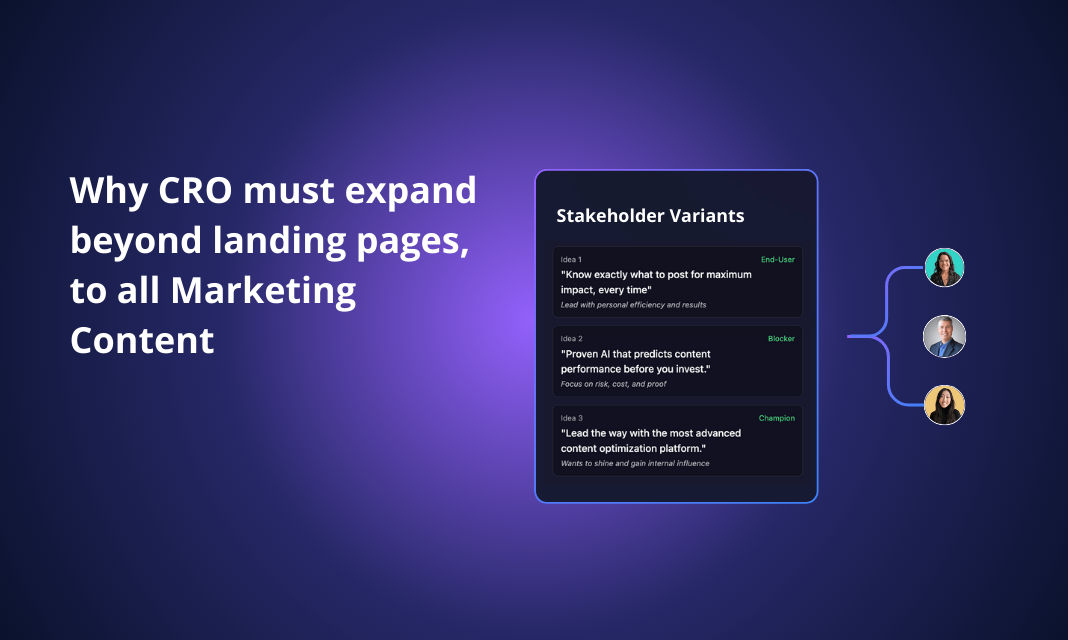
Perhaps the single biggest shift in B2B sales over the last decade is the rise of the buying committee. You're no longer selling to one person; you're selling to a group, each with their own priorities. The CEO cares about ROI, the IT Director about security, and the end-user about daily workflow. A generic whitepaper might appeal to one, but alienate the others. This is where content optimization becomes a superpower.
This isn't about creating entirely new content for every single individual. It's about intelligently adapting existing assets. Imagine taking a core use case and automatically generating tailored summaries:
-
For the CEO: A one-page executive brief focused on market share and profitability.
-
For the IT Director: A concise overview of integration capabilities and data security protocols.
-
For the End-User: A quick video demonstrating how the solution simplifies their daily tasks.
This level of personalized content marketing ensures every stakeholder feels understood, significantly accelerating the sales cycle by aligning the entire buying committee.
4. Content for every stage of the funnel
Effective content strategy recognizes that different stages of the buyer's journey require different types of content. It’s not just about top-of-funnel attraction (blog posts). It’s about a cohesive content journey:
-
Awareness: Informative blog posts, infographics, social media snippets.
-
Consideration: Detailed whitepapers, webinars, expert guides.
-
Decision: Case studies, ROI calculators, demo videos, competitive comparisons.
The goal is to provide consistent value and clear next steps, naturally guiding the prospect deeper into the funnel. Each piece of B2B content should have a specific purpose and a clear call-to-action tailored to its stage.
5. Data-driven content for revenue, not just clicks
The most significant evolution in content strategy comes from data. Modern marketing isn't just about creating content; it's about optimizing it for tangible business outcomes. We're moving beyond vanity metrics like page views and focusing on how content impacts revenue generation.
This means:
-
Tracking content's influence on conversion rates: Which articles lead to demo requests? Which case studies result in proposals?
-
Understanding content's role in pipeline velocity: Does sharing a specific piece of content shorten the sales cycle?
-
Using AI for proactive insights: Tools can now analyze your audience and content, providing recommendations on how to refine messaging for higher B2B conversion rates for specific segments of your target market. This AI-powered content optimization ensures every piece of content actively contributes to the bottom line.
Competitiveness in the hybrid approach, when AI works with you
The secret to truly accelerating sales through content isn't about handing the reins entirely to AI. It's about a powerful partnership. Your seasoned marketing professionals bring the creativity, the brand voice, and the deep understanding of human psychology. AI brings the data, the speed, and the analytical muscle to make that human expertise exponentially more effective.
By leveraging AI in B2B marketing to understand your audience at a granular level and tailor your content across the entire sales journey, you transform content from a cost center into a potent revenue engine. The gap between marketing and sales doesn't just close; it becomes a seamless, collaborative machine focused on one thing: accelerating your business growth.
Ready to turn your content into your sales team's most powerful asset?
Discover how Nodac's AI-driven solution helps B2B teams create content that truly converts, for every stakeholder. Try our free demo today!